Effective communication is an extremely valuable skill, the importance of which we often underestimate. It is an ability that is simply essential in daily life, both for children and adults. Without clearly, effectively, and judiciously articulating one’s thoughts, needs, and feelings, we will not be able to build healthy, valuable relationships, acquire and apply knowledge, or achieve success in professional life.
Effective communication is an extremely important element of daily life from the earliest age. Moreover, it is difficult to imagine a more important parenting skill than communicating with one’s own child. Why? Our offspring, regardless of their age, knowing that they can turn to us with any problem, and knowing that they will be heard and can count on our support, develop important feelings and values. Thanks to this, they feel important and loved, have a sense of agency, and also learn healthy self-esteem, problem-solving, cooperation, and building relationships with other people. Effective communication also has a purely educational aspect, which becomes extremely important, especially during adolescence, when an open, honest, and responsible parent often becomes the only person with whom a teenager can talk without fear of ostracism or exclusion. However, for this to happen, one must work on it from the earliest years.
Dedicate time to the child
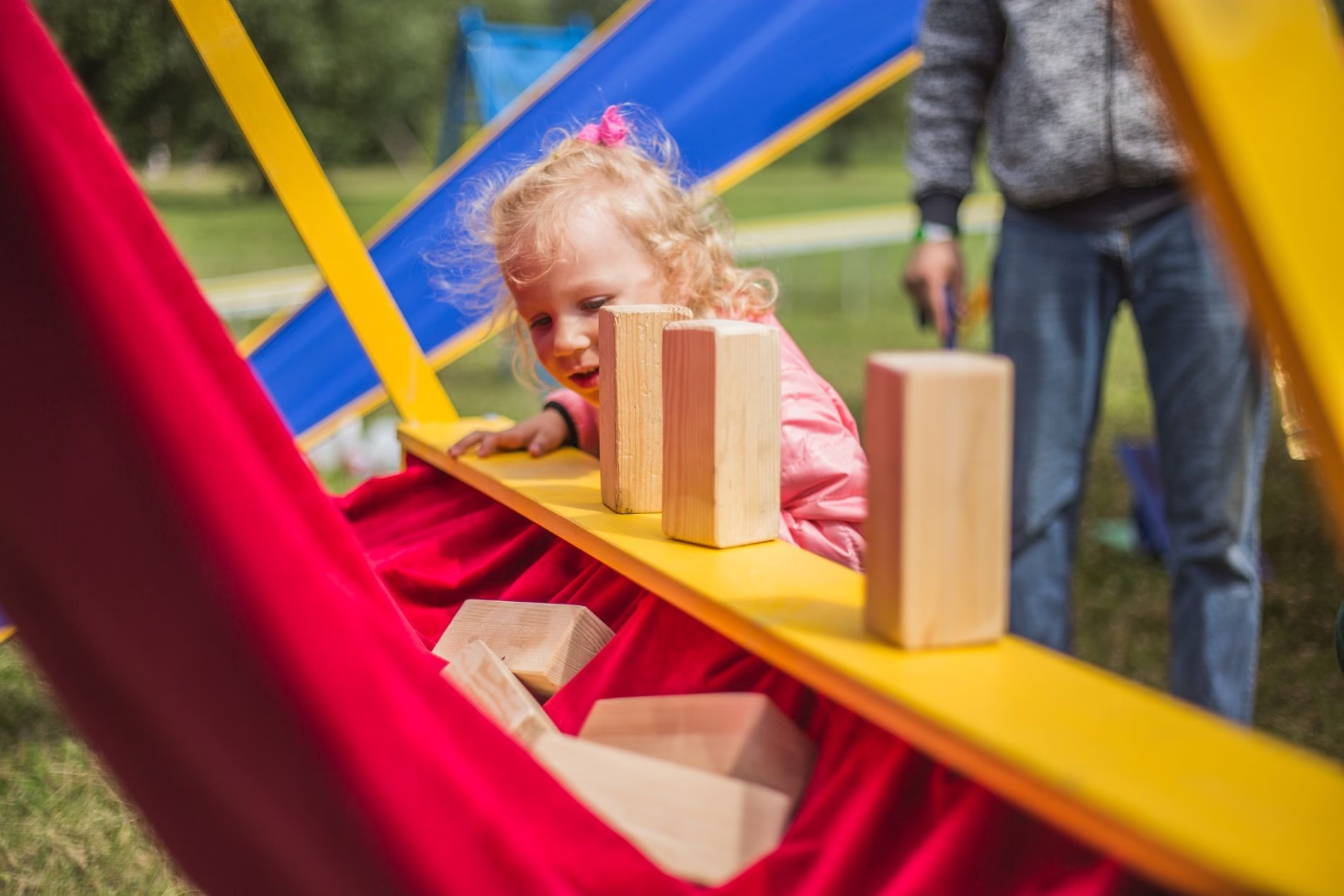
It sounds trivial, yet many of us, while talking to children, are doing other things: cleaning, cooking, or watching TV. Seemingly innocent, we subconsciously send a message that what the child wants to tell us is less important than dinner, a clean bathroom, or a series. So, if we dedicate time to the child, let’s dedicate it only to them; let it truly be time spent with the child, and not in the company of numerous distractions. These don’t have to be expensive, elaborate entertainments: it can be playing together (building blocks, drawing, or a home-made performance created together are great), reading books, a walk or riding a bicycle, scooter, or roller skates, or simply, just a conversation. Without the TV blaring in the background or nervously glancing at the phone.
Give a good example
To us adults, it may seem trivial, but these seemingly simple activities build a child’s sense of self-worth and the conviction that it is worth communicating. When a child is sure that their parents want to listen, they will be more willing to initiate conversation, share problems, and build valuable relationships. So, instead of listening with one ear, let’s listen to the child very carefully—because pretending to listen can very quickly discourage them. We must also set a good example ourselves and try to communicate clearly and non-aggressively, both with children and with other adults in our environment. And when something goes wrong, let’s not be afraid to analyze such situations; we have plenty of such examples in everyday life, after all. By jointly considering what could have been said or done to communicate more effectively, we shape healthy communication habits in the child that will surely pay off in their future life.